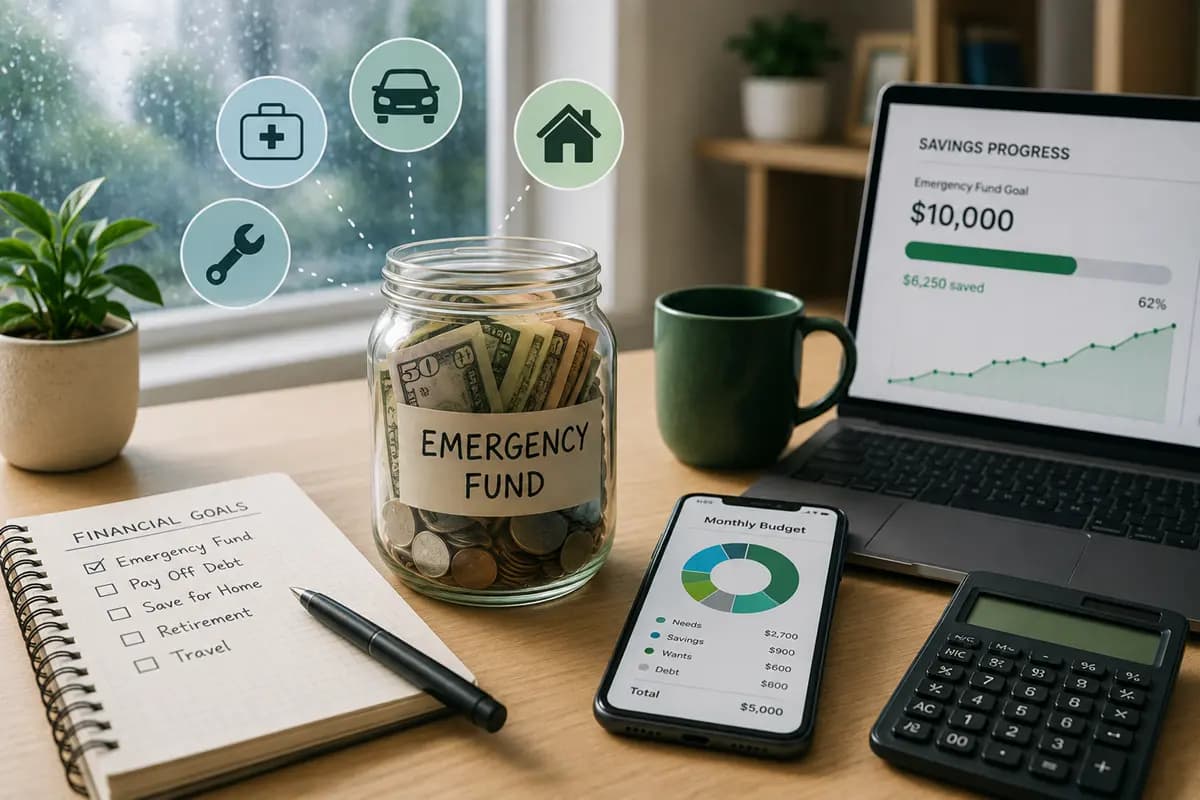

When people think about financial security, they often imagine a six-figure salary, a growing investment portfolio, or owning a home. In reality, the strongest financial safety net usually starts with something much simpler: having enough cash set aside to deal with life’s unexpected surprises.
A broken transmission, an emergency room visit, a sudden layoff, or even an expensive home repair can disrupt months—or years—of financial progress if you’re forced to rely on credit cards or personal loans. That’s exactly why financial planners consistently recommend building an emergency fund before chasing more ambitious financial goals.
An emergency fund isn’t designed to make you wealthy. It’s designed to keep a temporary setback from becoming a long-term financial problem.
In today’s economy, where inflation has increased the cost of everyday necessities and many households continue to face higher housing, insurance, and healthcare expenses, having accessible cash has become more important than ever.
The biggest misunderstanding about emergency funds
Many people believe there’s a magic number everyone should save. You’ll often hear advice suggesting three months of expenses, six months of expenses, or even a full year of living costs.
The truth is that there isn’t a universal target.
Someone with a stable government job, excellent health insurance, and two steady household incomes faces a very different level of risk than a freelancer whose income changes every month or a single parent supporting children alone.
Instead of asking, “How much should everyone save?” a better question is, “How much would allow me to recover from my most likely financial emergency without going into debt?”
That’s the number that matters.
Start with one month, not six
One reason many people never build an emergency fund is that the goal feels overwhelming.
If your monthly expenses total $4,000, saving six months of expenses means accumulating $24,000. For most households, that’s intimidating enough to prevent them from starting at all.
A better strategy is to think in milestones.
The first objective might simply be saving $1,000. Once that goal is reached, work toward covering one full month of essential expenses. After that, aim for three months, and eventually six if your circumstances justify it.
Each milestone dramatically improves your financial resilience, even if you’re still working toward the larger goal.
Building financial security is rarely about one giant leap. It’s usually the result of hundreds of consistent monthly decisions.
Where should you keep your emergency savings?
One of the most common mistakes people make is investing money they’ll potentially need tomorrow.
Emergency savings shouldn’t be exposed to stock market volatility. If your investments fall 25% at the same time you lose your job, you’re forced to sell assets when prices are already down.
Instead, your emergency fund should prioritize three qualities:
- Safety
- Liquidity
- Accessibility
For most Americans, that means keeping the money in a high-yield savings account or another FDIC-insured cash account where it remains protected while still earning interest.
The purpose of an emergency fund isn’t maximizing returns—it’s guaranteeing access when life doesn’t go according to plan.
When should you actually use it?
An emergency fund isn’t there for holiday shopping, upgrading your phone, or taking advantage of a sale.
It exists for events that are unexpected, necessary, and financially significant.
Losing your job, replacing a failed furnace in the middle of winter, paying a major medical bill, or repairing a vehicle you depend on to get to work are exactly the kinds of situations these savings are meant to cover.
If every inconvenience becomes an “emergency,” the account quickly loses its value.
The discipline isn’t only in saving the money—it’s in protecting it until it’s genuinely needed.
Why emergency savings reduce financial stress
Money affects far more than bank balances.
Numerous studies have shown that financial uncertainty contributes to anxiety, sleep problems, relationship stress, and reduced workplace productivity. Even relatively small cash reserves can improve decision-making because they give people time to respond thoughtfully instead of reacting out of panic.
Imagine receiving an unexpected $2,000 repair bill.
Without savings, the decision may involve high-interest debt, borrowing from family, or missing other essential payments.
With an emergency fund, the problem is still inconvenient—but it no longer threatens your financial stability.
That’s the real value of emergency savings. They don’t eliminate emergencies. They reduce the damage those emergencies cause.
Building an emergency fund faster
Growing your savings doesn’t always require dramatic lifestyle changes.
Many successful savers automate a fixed transfer every payday before they have the chance to spend the money elsewhere. Others direct tax refunds, work bonuses, freelance income, or cash gifts straight into their emergency fund.
Increasing income can often have a greater impact than cutting every small expense. Negotiating a salary increase, taking on occasional freelance work, or selling unused items may accelerate your savings far more quickly than giving up a few restaurant meals each month.
Consistency matters much more than perfection.
A person who saves $200 every month for several years is likely to build greater financial security than someone who saves aggressively for a few weeks before giving up entirely.
Financial confidence starts before you need it
The irony of an emergency fund is that you hope you never need it.
Its greatest benefit isn’t earning interest or sitting in your savings account. It’s providing confidence that an unexpected expense won’t immediately become a financial crisis.
The most financially secure households aren’t necessarily those with the highest incomes. They’re often the ones that prepare for uncertainty before uncertainty arrives.
Building an emergency fund isn’t the most exciting financial goal. It won’t make headlines or generate impressive investment returns. But few financial decisions provide as much long-term peace of mind.