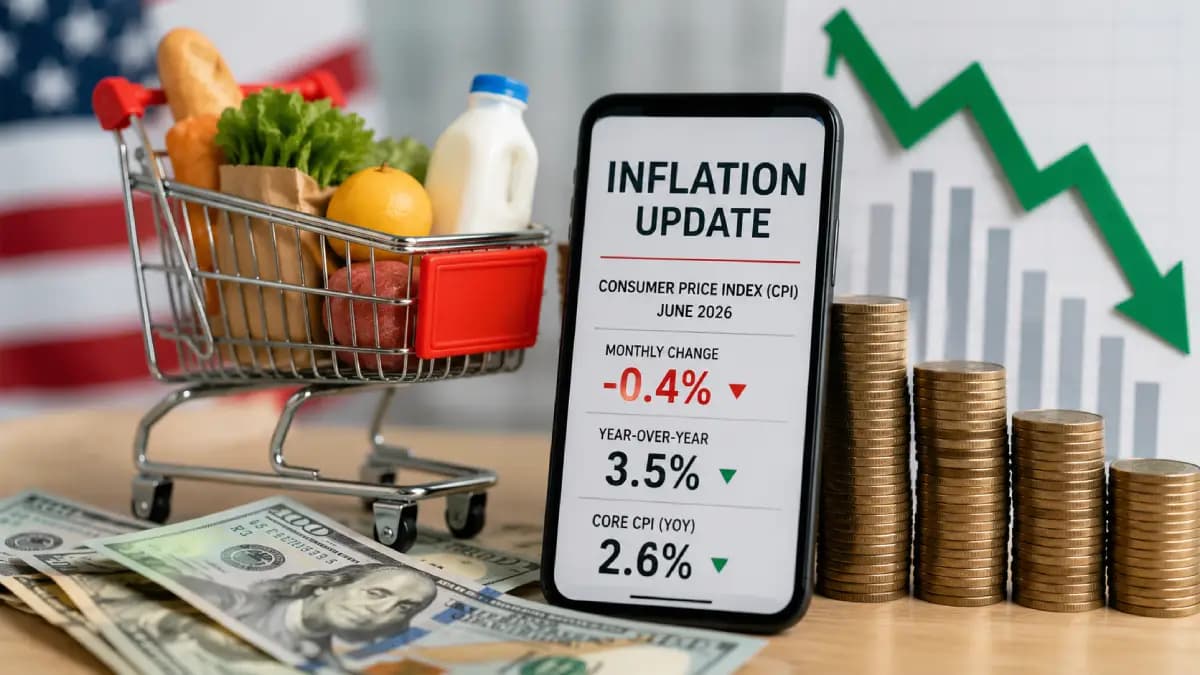
The latest U.S. inflation report brought encouraging news for consumers. Prices fell 0.4% in June compared with May, marking the largest monthly decline since April 2020, while annual inflation slowed to 3.5%, well below economists’ expectations. Much of the improvement came from lower energy prices, especially gasoline, although inflation remains above the Federal Reserve’s long-term 2% target.
Key numbers
| Indicator | Previous | Latest |
|---|---|---|
| Monthly CPI | +0.5% | -0.4% |
| Annual CPI | 4.2% | 3.5% |
| Core CPI (YoY) | 2.9% | 2.6% |
| Energy prices | +3.9% | -5.7% |
What happened?
According to the U.S. Bureau of Labor Statistics, falling gasoline prices were the biggest reason inflation eased during June. Energy prices declined sharply, offsetting increases in several other categories. Core inflation—which excludes food and energy—was unchanged during the month and slowed to 2.6% annually, another sign that underlying price pressures have weakened.
What does this mean for consumers?
Lower inflation does not mean prices are returning to where they were a few years ago. It simply means prices are rising more slowly—or, in June’s case, declined slightly from the previous month.
For households, this could mean:
- Lower pressure on everyday expenses.
- A reduced likelihood of another immediate Federal Reserve rate increase.
- Better conditions for borrowers if interest rates eventually begin to decline.
- Savings account rates could remain attractive while the Fed keeps policy restrictive.
What happens next?
Markets now expect the Federal Reserve to keep interest rates unchanged at its July meeting while monitoring future inflation data. However, analysts warn that higher oil prices caused by geopolitical tensions could quickly reverse part of June’s improvement.
Bottom line
June’s inflation report was one of the strongest signs in months that price pressures are easing. While consumers are unlikely to notice dramatic changes overnight, slower inflation improves the outlook for borrowing costs and overall financial conditions.
The next major inflation report is scheduled for August 12, when investors and consumers will learn whether this cooling trend continues.