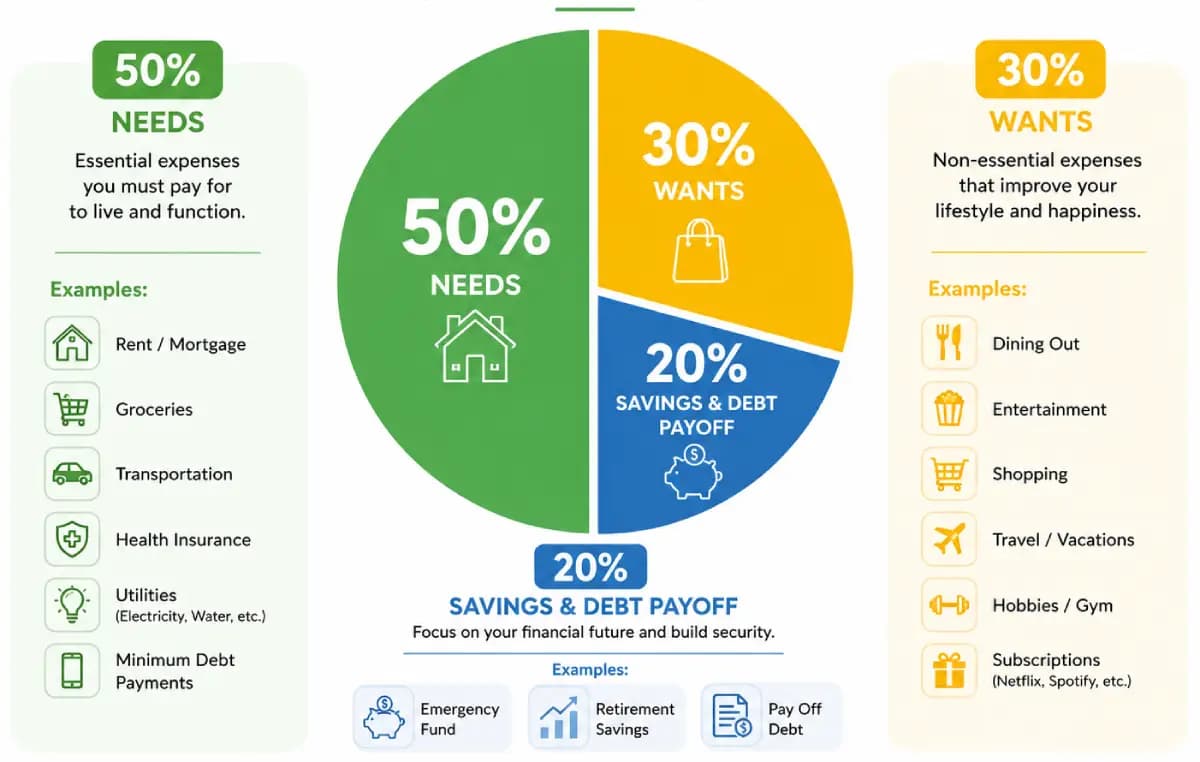
For years, the 50/30/20 budget rule has been one of the simplest recommendations in personal finance. Financial coaches, budgeting apps, banks, and investment platforms have all promoted it as an easy framework for managing income without becoming overwhelmed by spreadsheets and complicated formulas. Even people who have never created a formal budget have probably heard the advice: spend 50% of your income on needs, 30% on wants, and save or invest the remaining 20%.
The idea is appealing because it is easy to remember. Instead of tracking dozens of spending categories, you only need to think about three. It removes much of the complexity that causes many people to abandon budgeting after only a few weeks.
But personal finance has changed dramatically over the past decade. Housing costs have climbed in most American cities, grocery prices remain well above pre-pandemic levels, insurance premiums continue to rise, and many workers are juggling student loan payments alongside higher interest rates on credit cards and auto loans. A budgeting method that worked comfortably in 2015 may feel almost impossible for households in 2026.
That doesn’t mean the 50/30/20 rule is obsolete. It simply means it should be treated as a flexible guideline rather than a rigid formula. Understanding why it was created—and how to adapt it to today’s financial reality—can make it far more useful than blindly following percentages that don’t fit your circumstances.
Understanding the three categories
At its core, the budgeting rule divides your after-tax income into three broad groups.
The first category, needs, includes expenses that are essential for maintaining your basic lifestyle. Housing, utilities, groceries, transportation to work, health insurance, minimum debt payments, and other unavoidable bills all belong here. If you stopped paying these expenses, your daily life would be directly affected.
The second category covers wants. These are the purchases that improve your lifestyle but aren’t strictly necessary. Dining out, streaming subscriptions, vacations, entertainment, hobbies, shopping, premium phone upgrades, and many online subscriptions all fall into this group.
The final 20% is reserved for building your future. That includes emergency savings, retirement contributions, investments, paying extra toward high-interest debt, or saving for major financial goals such as a home down payment.
The simplicity of these categories is one of the reasons the system became so popular. People rarely fail because budgeting is mathematically difficult—they fail because it becomes emotionally exhausting. Reducing dozens of spending decisions into three larger buckets helps many households stay consistent.
Why the original formula doesn’t always fit today’s economy
One of the biggest criticisms of the 50/30/20 rule is that it assumes housing consumes roughly half of your essential expenses. In reality, housing has become the largest financial challenge for millions of Americans.
According to recent housing market data, many renters now spend well above 30% of their income on rent alone. After adding utilities, transportation, insurance, and groceries, essential expenses can easily reach 65% or even 70% of take-home pay.
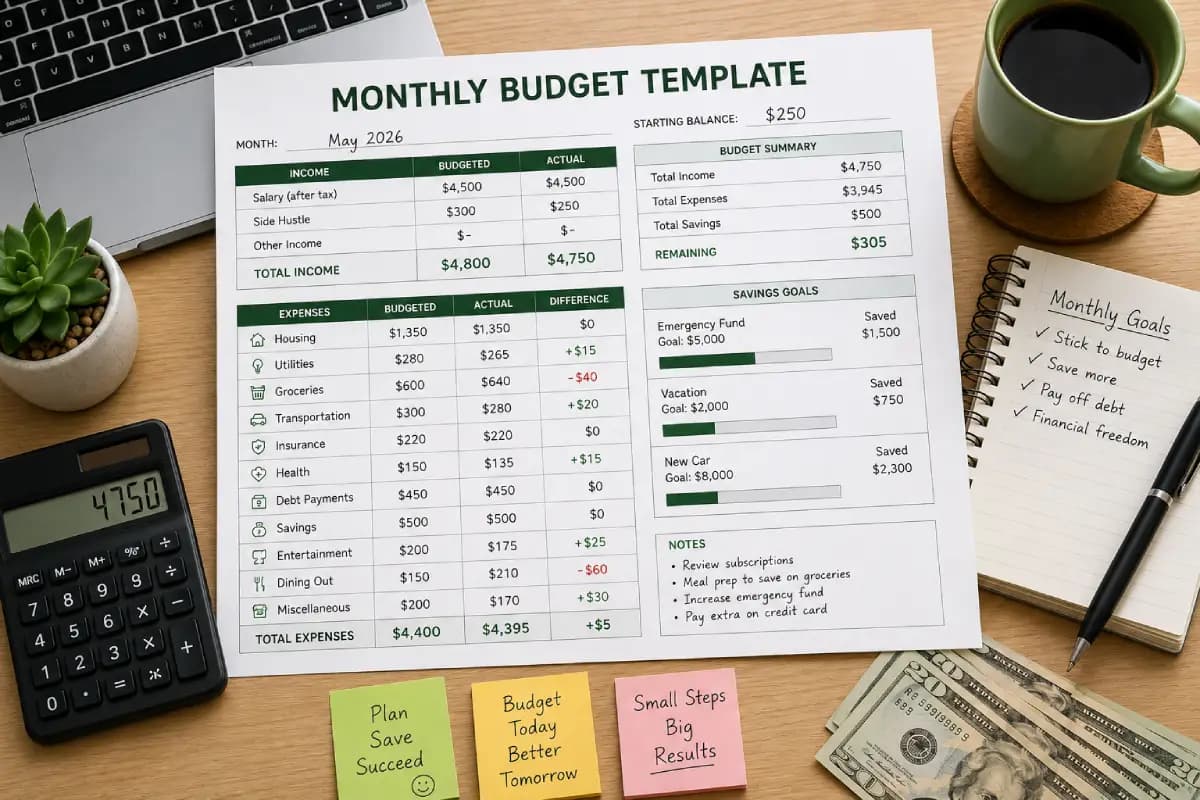
Someone earning $4,500 per month after taxes would ideally spend no more than $2,250 on necessities under the traditional formula. Yet in many metropolitan areas, rent alone can exceed $2,000 before any other monthly bills are considered.
Inflation has added another layer of pressure. Grocery prices, car insurance, healthcare, and everyday household expenses have all increased significantly compared with only a few years ago. As a result, many families find themselves reducing discretionary spending simply to cover basic living costs.
This doesn’t necessarily indicate poor financial habits. Often, it reflects economic conditions that are outside an individual’s control.
Why flexibility matters more than perfection
Many people abandon budgeting after the first month because they believe they’ve failed. Their essential expenses reached 62% instead of 50%, or they only managed to save 12% instead of 20%.
In reality, budgeting should be viewed as a direction rather than a scorecard.
Imagine two households earning the same income. One lives in a low-cost Midwestern city with affordable housing, while the other rents an apartment in New York City or San Francisco. Expecting both families to maintain identical spending percentages ignores enormous regional differences in the cost of living.
The more useful question isn’t whether your budget matches the textbook formula. Instead, ask whether your financial situation is improving month after month.
Are your savings growing?
Is your credit card balance shrinking?
Are you relying less on debt?
Can you handle an unexpected expense without panic?
Positive answers to those questions matter far more than perfectly matching predetermined percentages.
Adapting the rule for modern households
Many financial planners now recommend adjusting the percentages to match your current stage of life rather than forcing yourself into an unrealistic budget.
A recent graduate paying off student loans may temporarily follow a 60/20/20 approach.
A young family facing childcare costs might operate closer to 65/15/20.
Someone aggressively paying off high-interest credit card debt could intentionally reduce discretionary spending for a year while directing more than 20% toward debt repayment.
The percentages themselves are less important than maintaining balance between today’s lifestyle and tomorrow’s financial security.
The greatest danger isn’t spending 55% on necessities. It’s allowing lifestyle inflation to consume every future raise, leaving nothing available for investing or emergency savings.
Small improvements often beat major budget cuts
When people decide to “fix” their finances, they often focus on eliminating coffee purchases or canceling a streaming subscription. While those savings can help, they rarely transform a household budget.
Much larger gains usually come from optimizing high-cost categories.
Negotiating car insurance.
Refinancing expensive debt.
Reducing housing costs when possible.
Increasing retirement contributions before lifestyle spending expands.
Pursuing salary growth through new skills or career advancement.
These decisions can improve monthly cash flow by hundreds of dollars instead of only a few dollars at a time.
The 50/30/20 rule works best when paired with thoughtful financial decisions rather than strict deprivation.
Budgeting should reduce stress – not create it
The purpose of budgeting is often misunderstood.
Many people think a budget exists to limit spending. In reality, its primary purpose is to help people spend intentionally.
A well-designed budget allows someone to enjoy vacations, hobbies, dining out, or entertainment without guilt because those expenses were planned in advance. At the same time, it ensures that future goals—retirement, emergency savings, education, or homeownership—continue moving forward.
Financial confidence rarely comes from earning a perfect income. It comes from consistently making intentional decisions with the income you already have.
The 50/30/20 rule remains valuable because it encourages exactly that mindset.
It provides a simple framework that can evolve as your income, family, career, and financial priorities change. In today’s economy, flexibility has become just as important as discipline. Rather than treating the rule as a strict mathematical formula, think of it as a compass that helps guide your financial decisions in the right direction.