A budget is much easier to follow when you know exactly when money comes in and when it goes out. That’s where a budget calendar becomes one of the most valuable financial planning tools.
Instead of reacting to bills as they arrive, a budget calendar helps you plan ahead, avoid late fees, reduce financial stress and make smarter decisions throughout the month.
Whether you’re living paycheck to paycheck or simply want more control over your finances, creating a budget calendar takes less than an hour and can completely change how you manage your money.
Key takeaways
- A budget calendar shows income, bills and savings in one place.
- Planning expenses before payday reduces financial stress.
- Never miss due dates or late payment fees.
- Review your calendar weekly instead of only at the end of the month.
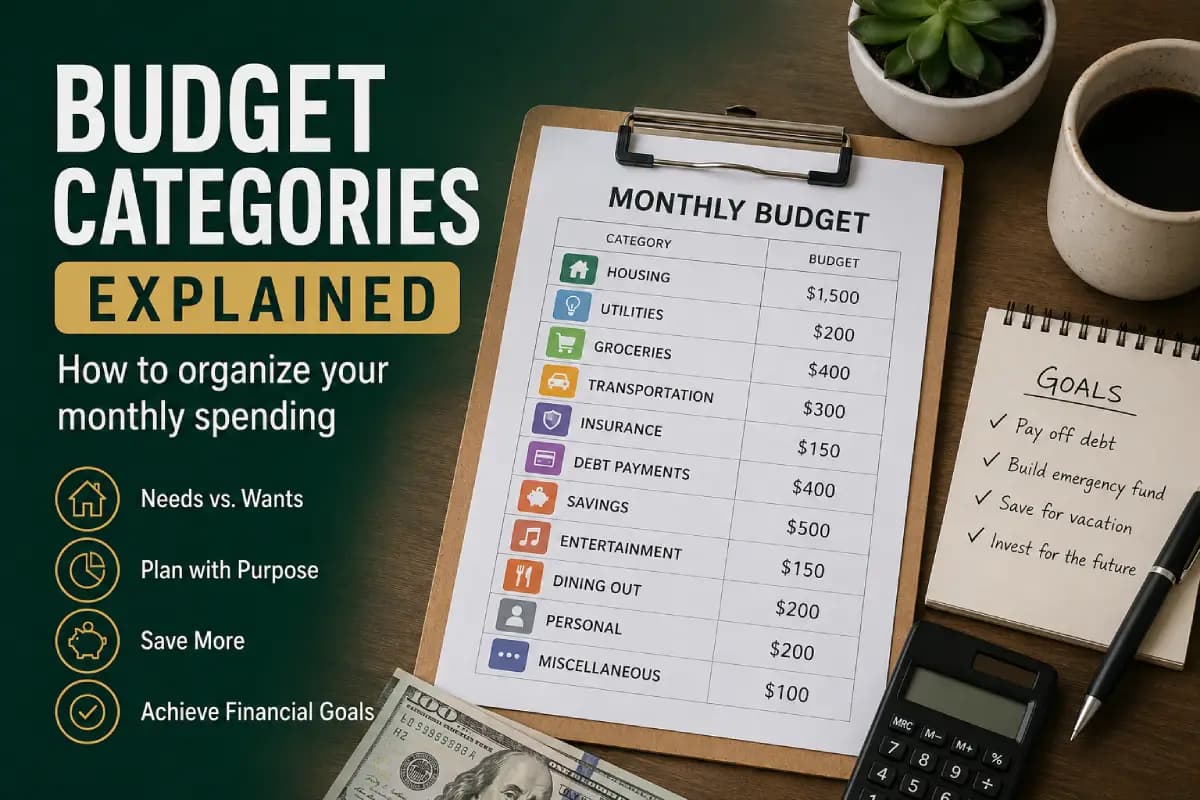
- Combine your calendar with a monthly budget for the best results.
What is a budget calendar?
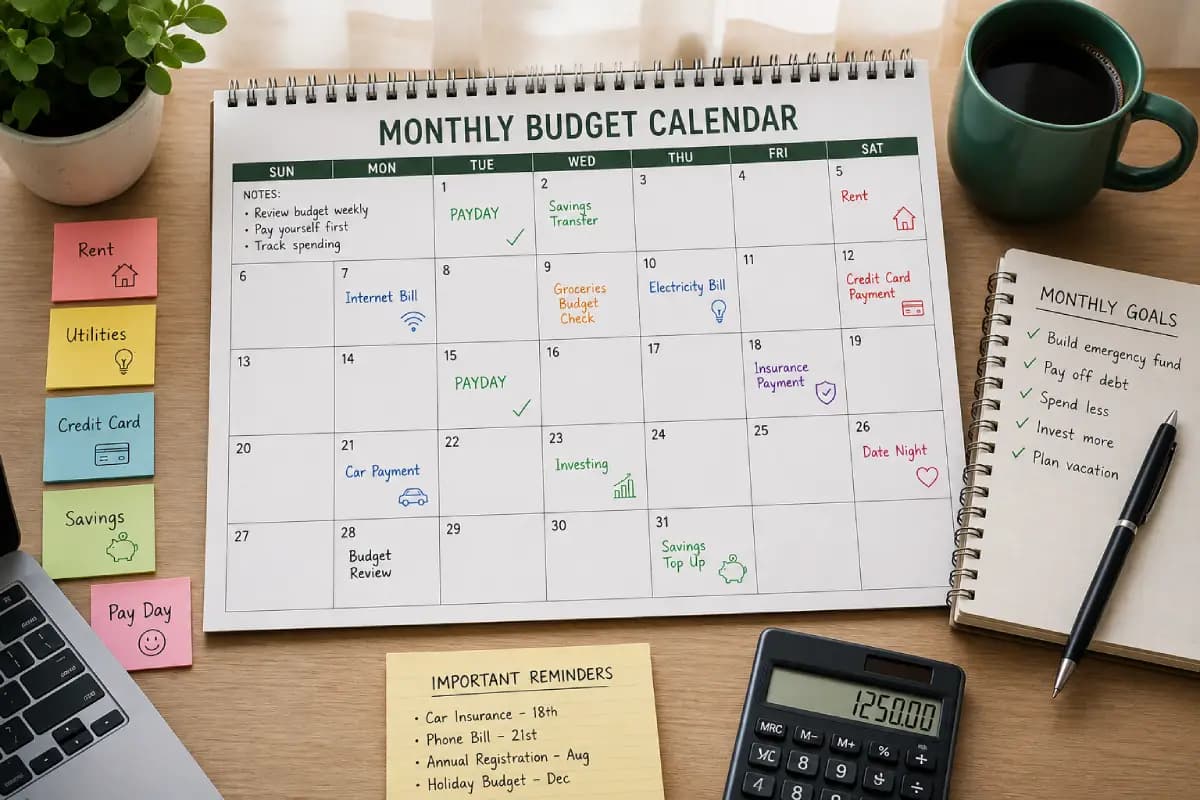
A budget calendar is a monthly planning tool that combines your income, bills, savings goals and important financial dates into one easy-to-read schedule.
Unlike a traditional budget spreadsheet that focuses only on numbers, a budget calendar focuses on timing.
Knowing when money enters and leaves your account helps prevent overdrafts, missed payments and unnecessary stress.
Think of it as a financial roadmap for the month ahead.
Why a budget calendar works
Many people know how much they earn and roughly how much they spend, but they still struggle financially because they don’t pay attention to timing.
For example:
- Your paycheck arrives on the 15th.
- Your rent is due on the 16th.
- Your credit card payment is due on the 18th.
- Your car insurance renews on the 20th.
If you aren’t planning ahead, it becomes easy to overspend during the first few days after payday.
A budget calendar removes this uncertainty by showing every important financial event before it happens.
Benefits of using a budget calendar
- Pay bills on time.
- Avoid late fees.
- Reduce overdraft charges.
- Plan savings automatically.
- Improve cash flow.
- Reduce financial anxiety.
- Prepare for irregular expenses.
Pro tip
The best time to prepare your budget calendar is a few days before a new month begins—not after you’ve already started spending.
What should be included in a budget calendar?
Your calendar should include every important financial event.
| Include | Examples |
|---|---|
| Income | Salary, freelance income, bonuses |
| Bills | Rent, utilities, subscriptions |
| Debt payments | Credit cards, personal loans |
| Savings | Emergency fund, investing |
| Annual expenses | Insurance, vehicle registration |
| Financial reminders | Monthly budget review |
The more complete your calendar is, the easier it becomes to stay organized.
Step 1: Mark every payday
Always begin with your income.
Highlight every payday during the month.
If you’re paid:
- Weekly
- Biweekly
- Twice per month
- Monthly
- Irregularly
Your calendar should clearly identify those dates.
Everything else is planned around your income.
Step 2: Add fixed bills
Next, enter every recurring monthly expense.
- Rent or mortgage
- Electricity
- Water
- Internet
- Phone
- Streaming services
- Insurance
- Loan payments
These are predictable expenses that rarely change.
Adding them first makes planning much easier.
Step 3: Schedule savings first
One of the biggest mistakes people make is saving whatever money is left at the end of the month.
Instead, schedule savings immediately after payday.
This approach—often called Pay Yourself First—helps build consistency and prevents spending your savings before you’ve had a chance to set them aside.
For example:
- Payday: July 1
- Emergency fund transfer: July 2
- Investment contribution: July 2
- Vacation fund: July 3
Automating these transfers makes the process even easier.
Step 4: Add irregular expenses
Not every bill arrives every month.
Your budget calendar should also include expenses such as:
- Annual insurance premiums
- Car maintenance
- Holiday shopping
- Birthdays
- School supplies
- Medical appointments
- Property taxes
Adding these dates early helps prevent unpleasant surprises later in the year.
In the next section, we’ll build a complete monthly budget calendar, explain weekly reviews, show common mistakes to avoid and provide a practical template you can copy for your own finances.
Step 5: Build your monthly budget calendar
Once you’ve added your income, recurring bills, savings contributions and irregular expenses, it’s time to put everything together into one monthly calendar.
Your goal isn’t simply to know what you’ll spend—it’s to know exactly when you’ll spend it.
| Date | Financial event | Status |
|---|---|---|
| 1 | Payday | Income |
| 2 | Emergency fund transfer | Automatic |
| 3 | Investment contribution | Automatic |
| 5 | Rent payment | Due |
| 8 | Internet bill | Due |
| 10 | Electricity bill | Due |
| 12 | Credit card payment | Due |
| 15 | Second paycheck | Income |
| 18 | Groceries | Budget review |
| 22 | Insurance payment | Due |
| 28 | Monthly budget review | Review |
Review your calendar every week
A budget calendar shouldn’t be something you only check at the beginning of the month.
Spend five to ten minutes every week reviewing upcoming expenses.
Ask yourself:
- Are all bills covered?
- Did any unexpected expenses appear?
- Can I move money between categories?
- Do I need to reduce discretionary spending?
- Am I still on track with my savings goal?
Weekly reviews make small adjustments before they become large financial problems.
Smart habit
Choose the same day every week—Sunday evening is popular—to review your calendar and prepare for the week ahead.
Digital vs. paper budget calendars
There isn’t a single correct way to manage a budget calendar.
| Digital calendar | Paper planner |
|---|---|
| Automatic reminders | Easy to personalize |
| Works on every device | No technology required |
| Easy recurring events | Many people remember better when writing |
| Simple updates | Provides a visual overview |
Many people combine both—a digital calendar for reminders and a paper planner for monthly planning.
Common mistakes to avoid
Only writing down bills
Your calendar should also include income, savings transfers and financial reviews.
Ignoring annual expenses
Insurance renewals, holiday shopping and vehicle registration should appear months before they’re due.
Not updating the calendar
Your financial situation changes throughout the year. Review and update your calendar regularly.
Trying to remember everything
The purpose of a budget calendar is to reduce mental stress—not increase it.
Write everything down.
Who should use a budget calendar?
A budget calendar is useful for almost everyone, but it’s especially valuable if you:
- Have multiple paychecks each month.
- Live paycheck to paycheck.
- Manage household finances.
- Frequently forget bill due dates.
- Want to improve your savings habits.
- Have irregular income.
Related budgeting guides
- Budget categories explained
- How to create a monthly budget
- Envelope budgeting explained
- Cash stuffing explained
- Emergency fund guide
Bottom line
A budget calendar is one of the simplest financial tools you can create, yet it has a powerful impact on your day-to-day money management. By planning income, bills, savings and important financial dates in advance, you reduce stress and gain greater confidence in your financial decisions.
Start with your paydays, schedule essential bills, automate savings and review your calendar every week. Over time, this simple habit can help you avoid late fees, improve cash flow and make budgeting feel much more manageable.
Frequently asked questions
What is the purpose of a budget calendar?
A budget calendar helps you organize income, bills, savings and important financial dates so you always know what payments are coming next.
Should I use a paper or digital budget calendar?
Both work well. Digital calendars provide reminders, while paper planners offer a clear visual overview. Many people use both together.
How often should I review my budget calendar?
A quick weekly review and a more detailed monthly review are enough for most households.
Can a budget calendar help me save money?
Yes. Planning ahead helps prevent late fees, impulse spending and missed savings contributions.
Is a budget calendar different from a monthly budget?
Yes. A monthly budget focuses on how much you plan to spend, while a budget calendar focuses on when income and expenses occur throughout the month.