Cash stuffing is a budgeting method that divides money into physical envelopes or binder categories for specific expenses. Instead of using one bank balance for everything, you set aside cash for groceries, transportation, dining out, personal spending and other parts of your monthly plan.
The method became highly visible on social media, where people record themselves organizing bills into labeled envelopes and savings challenges. But cash stuffing is not a new financial strategy. It is a modern version of the traditional envelope budgeting system.
Cash stuffing can make spending limits easier to see and harder to ignore. However, it also has practical disadvantages, including the inconvenience and security risks of carrying cash.
Key takeaways
- Cash stuffing assigns physical cash to individual spending categories.
- It is most useful for flexible expenses such as groceries, dining out and entertainment.
- The method can reduce impulse spending by creating a visible limit.
- Fixed bills, savings and online payments do not necessarily need physical envelopes.
- You can use a hybrid system that combines cash envelopes with bank accounts and budgeting tools.
What is cash stuffing?
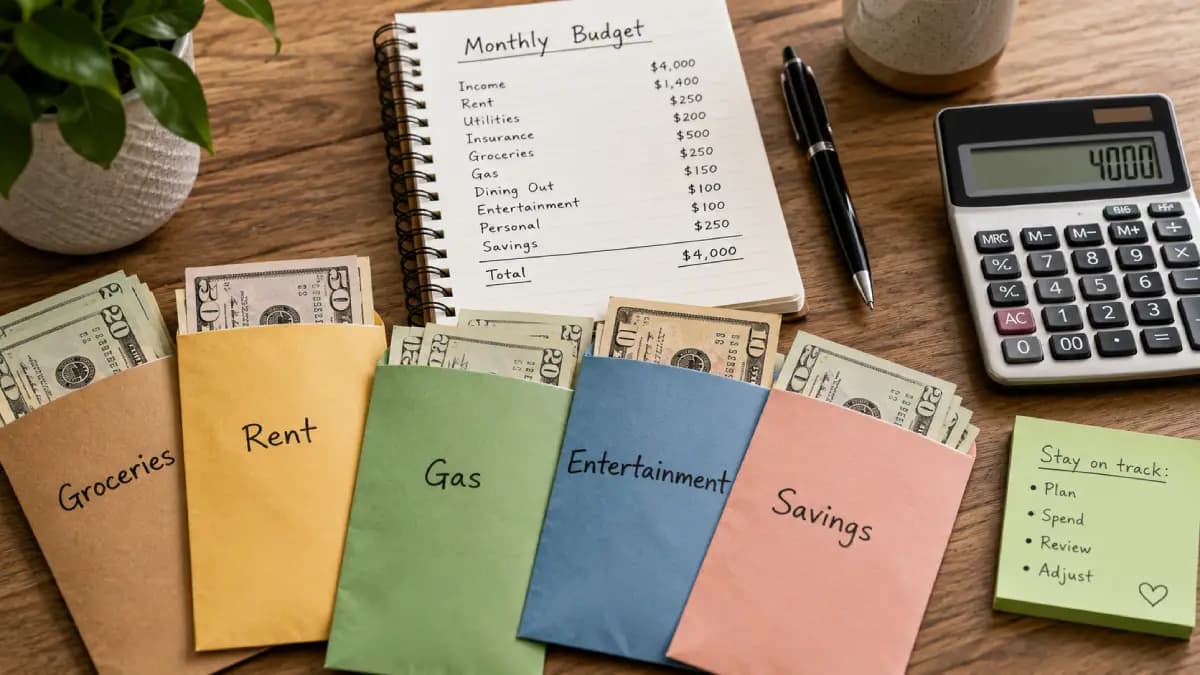
Cash stuffing is the practice of placing a planned amount of physical cash into labeled envelopes, pouches or sections of a budgeting binder.
Each envelope represents a spending category. Common examples include:
- Groceries
- Gas
- Dining out
- Entertainment
- Personal spending
- Household supplies
- Clothing
- Gifts
If the grocery envelope contains $500, you have $500 available for groceries during that budgeting period. Once the cash is gone, you either stop spending, wait until the next period or deliberately transfer money from another envelope.
The physical separation prevents money intended for one purpose from being spent accidentally on something else.
How does cash stuffing work?
The basic process is straightforward, but it works best when it begins with a complete monthly budget.
1. Calculate your take-home income
Start with the amount of money that reaches your bank account after taxes, insurance premiums, retirement contributions and other payroll deductions.
If your income changes each month, use a conservative estimate rather than your highest recent paycheck.
People with limited or unpredictable income may also benefit from our guide on how to budget on a low income.
2. Reserve money for fixed bills and financial goals
Do not withdraw every dollar as cash. First reserve money for obligations that are normally paid electronically, including:
- Rent or mortgage
- Utilities
- Insurance premiums
- Loan payments
- Phone and internet
- Subscriptions you intend to keep
- Emergency savings
- Retirement contributions
Cash stuffing is primarily intended to control flexible spending, not replace every part of your financial system.
3. Select your cash categories
Choose the categories where you are most likely to overspend or where a clear limit would improve your decisions.
A beginner may start with five categories:
| Cash envelope | Monthly amount |
|---|---|
| Groceries | $500 |
| Gas | $250 |
| Dining out | $150 |
| Entertainment | $100 |
| Personal spending | $100 |
| Total cash needed | $1,100 |
It is usually easier to maintain five to eight useful categories than 20 highly specific envelopes.
4. Set realistic limits
Review recent bank and credit card statements before deciding how much each envelope should receive.
If your household normally spends $700 on groceries, starting with a $350 grocery envelope is unlikely to be sustainable. A more realistic first target may be $625, followed by gradual reductions.
Use the Fintayo Budget Calculator to compare your income with needs, wants, savings and debt payments before setting limits.
5. Withdraw and organize the cash
Withdraw the total amount needed for your chosen categories. Divide the bills among labeled envelopes or binder sections.
You may use:
- Standard paper envelopes
- A reusable budgeting binder
- Zipper pouches
- A wallet with several compartments
- A lockable cash organizer stored at home
A decorative binder may make the process more enjoyable, but expensive budgeting supplies are not necessary. The system can work with ordinary envelopes and handwritten labels.
6. Spend only from the appropriate category
Use grocery cash only for groceries and entertainment cash only for entertainment.
When one envelope runs low, the reduced balance provides an immediate signal to slow down.
7. Record spending when necessary
You can see the remaining cash directly, but a transaction log may help when:
- Several household members use the same envelope
- You want to compare prices or spending patterns
- You occasionally use a card and reimburse the category later
- You need a detailed record for the next month’s plan
8. Review the results at the end of the month
Ask which envelopes were empty too early, consistently overfunded, frequently used for transfers or too specific to be useful.
Use the results to adjust next month’s amounts. Budgeting works best as a repeated review process, not a one-time setup.
A complete cash stuffing example
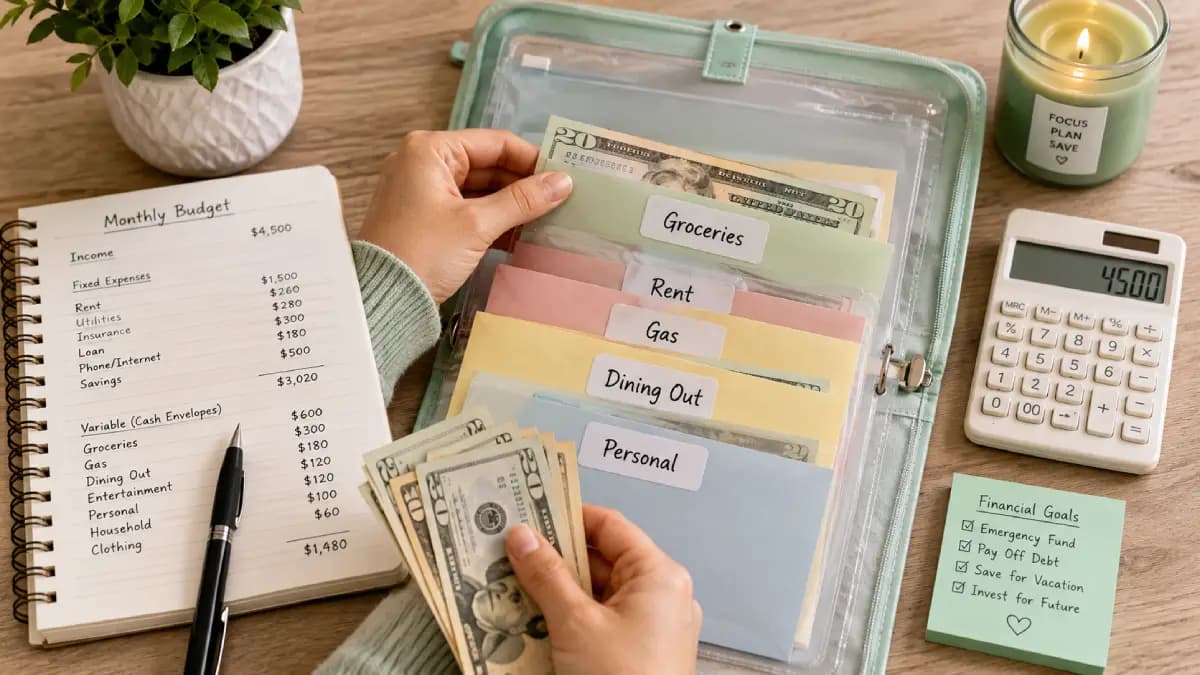
Assume monthly take-home income is $4,500.
First, the household reserves money for fixed bills, debt and savings:
| Fixed expense or goal | Monthly amount |
|---|---|
| Rent | $1,500 |
| Utilities | $260 |
| Insurance | $280 |
| Minimum debt payments | $300 |
| Phone and internet | $180 |
| Savings | $500 |
| Total fixed bills and goals | $3,020 |
This leaves $1,480 for variable expenses and limited discretionary spending.
| Cash category | Amount |
|---|---|
| Groceries | $600 |
| Transportation | $300 |
| Dining out | $180 |
| Entertainment | $120 |
| Personal spending | $120 |
| Household supplies | $100 |
| Clothing | $60 |
| Total cash categories | $1,480 |
Every dollar of the $4,500 income has a purpose. This makes cash stuffing compatible with zero-based budgeting.
What happens when an envelope is empty?
The most important moment in cash stuffing occurs when a category reaches zero.
Option 1: Stop spending
This is the strictest approach. If the dining-out envelope is empty, you stop eating at restaurants until the next budgeting period.
Option 2: Transfer money from another envelope
You may move money from entertainment to groceries if the grocery category was underestimated.
The transfer should be intentional. Moving $50 into groceries means accepting $50 less for entertainment.
Option 3: Adjust the next budget
If a category repeatedly runs out despite reasonable spending, the planned amount may be too low.
Increase that envelope and reduce another category, or look for a realistic way to reduce the underlying cost.
Important
Moving money between envelopes is not failure. It becomes a problem only when transfers are frequent, automatic and disconnected from your priorities.
Which expenses work best for cash stuffing?
Cash stuffing works best for flexible categories that are easy to overspend.
- Groceries
- Dining out
- Entertainment
- Clothing
- Personal spending
- Beauty and self-care
- Household supplies
- Children’s activities
Which expenses are less suitable for cash?
Some expenses are easier and safer to manage electronically:
- Rent or mortgage
- Utilities paid by automatic withdrawal
- Insurance premiums
- Online subscriptions
- Loan payments
- Retirement contributions
- Emergency savings
You can still treat them as categories in the budget without withdrawing the money.
Cash stuffing vs. envelope budgeting
Cash stuffing and envelope budgeting use the same core idea: assign money to specific categories before spending it.
The main difference is terminology and presentation. Envelope budgeting is the broader method. Cash stuffing usually refers to physically organizing bills in labeled envelopes or a binder.
Digital envelope systems are still envelope budgeting, but they are not technically cash stuffing because no physical cash is used.
Cash stuffing vs. zero-based budgeting
Zero-based budgeting gives every dollar of income a purpose, including bills, savings, debt payments and spending categories.
Cash stuffing focuses on the physical handling of flexible spending money.
The two methods can work together:
- Create a zero-based monthly plan.
- Reserve money for fixed bills, savings and debt payments.
- Withdraw the amount assigned to flexible categories.
- Place that cash into envelopes.
Cash stuffing vs. the 50/30/20 rule
The 50/30/20 rule divides take-home income into broad groups:
- 50% for needs
- 30% for wants
- 20% for savings and additional debt payments
Cash stuffing creates detailed limits inside those broad groups. For example, the wants category could be divided into dining, entertainment, shopping and personal spending envelopes.
Advantages of cash stuffing
It makes spending limits visible
You can see exactly how much remains in each category without reviewing a spreadsheet or app.
It can reduce impulse spending
Physical cash creates friction. Handing over bills may feel more deliberate than tapping a card.
It separates spending categories
Money intended for groceries is less likely to be spent on entertainment when it is physically separated.
It provides immediate feedback
A nearly empty envelope shows that spending must slow down before the month ends.
It can help people who dislike apps
The method does not require account syncing, software subscriptions or complex dashboards.
Disadvantages of cash stuffing
Cash can be lost or stolen
Physical money usually does not have the same protections as funds stored in a bank account.
It is inconvenient for online purchases
Many bills and purchases require electronic payments, which can make a cash-only system impractical.
It requires regular preparation
You must withdraw cash, organize envelopes and track reimbursements when card purchases occur.
It may complicate rewards and consumer protections
Using cash means giving up credit card rewards and some purchase protections. Rewards are valuable only when balances are paid in full and spending remains controlled.
It does not solve insufficient income
Cash stuffing can control allocation, but it cannot make an income shortfall disappear.
Is cash stuffing safe?
The method can be used safely, but storing significant amounts of cash at home creates risk.
Consider these precautions:
- Carry only the amount needed for current spending.
- Store remaining envelopes in a secure location.
- Do not display personal addresses or private information in social media videos.
- Avoid showing large amounts of cash publicly.
- Keep emergency savings in an insured bank account rather than at home.
- Use electronic payment methods for large or remote transactions.
Can you cash stuff when most purchases are online?
Yes, but you need a reimbursement process.
One method is:
- Make the online purchase with a debit or credit card.
- Remove the same amount from the appropriate cash envelope.
- Deposit the cash back into your checking account or keep it in a separate “card reimbursement” envelope.
- Pay the card balance using the reserved money.
This keeps the category limit accurate, but it requires discipline. A digital budgeting app may be easier if most purchases are electronic.
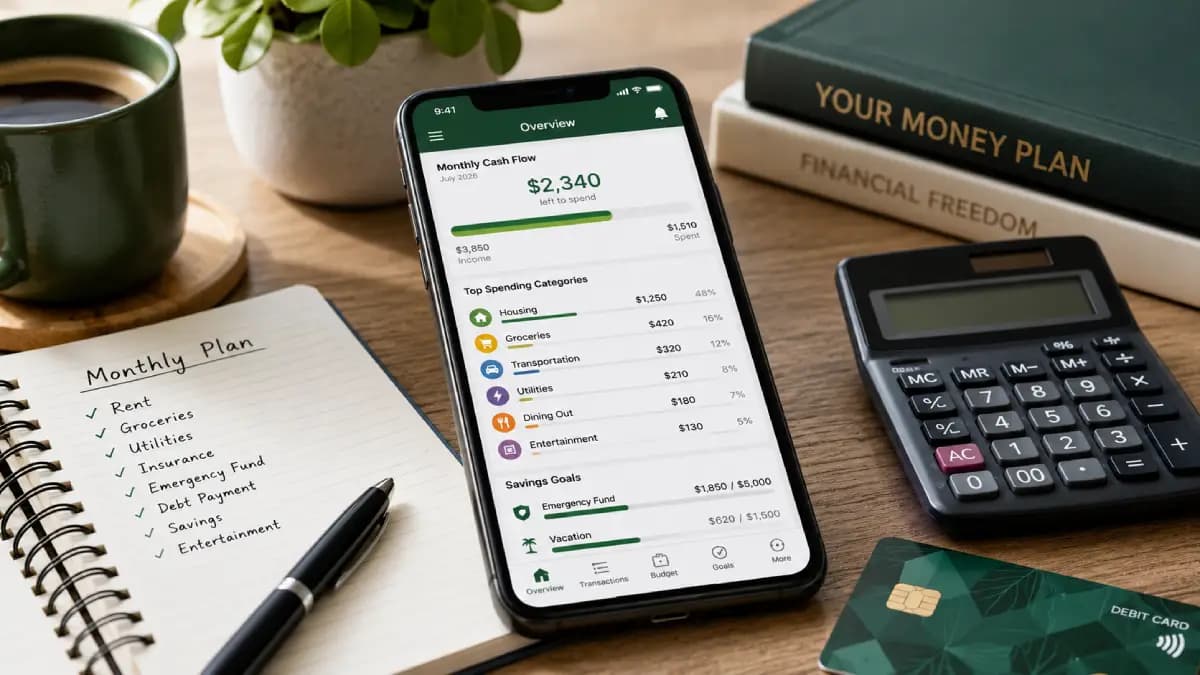
Our guide to the best budgeting apps compares several alternatives.
What should you do with leftover cash?
Choose a rule before the end of the month. Common options include:
- Roll the money into next month’s envelope.
- Move it to emergency savings.
- Add it to a sinking fund.
- Make an extra debt payment.
- Invest it according to your financial plan.
- Use part of it as a small reward.
Rolling every surplus forward can create flexibility in expensive months. Sweeping the money into savings may create faster progress toward financial goals.
Cash stuffing for savings goals
Some people use cash binders for sinking funds and short-term goals such as:
- Holiday spending
- Vacations
- Car maintenance
- School expenses
- Home repairs
- Annual insurance premiums
Physical cash can make progress visible, but large balances are generally safer in an insured savings account.
You can track progress with the Fintayo Monthly Budget Planner while keeping the actual savings in the bank.
Common cash stuffing mistakes
Withdrawing too much cash
Not every category needs a physical envelope. Keep fixed bills and long-term savings in appropriate accounts.
Using unrealistic limits
Review actual spending before reducing a category. A plan that is impossible to follow will not last.
Buying expensive budgeting supplies
A binder can be useful, but purchasing elaborate accessories can undermine the purpose of controlling spending.
Creating too many envelopes
Start with the categories that cause the most problems. Add detail only when it improves decisions.
Ignoring card purchases
If a purchase is charged to a card, reduce the corresponding envelope immediately so the category balance remains accurate.
Treating every transfer as failure
Budgets need flexibility. The important issue is whether transfers are deliberate and consistent with your priorities.
Who should consider cash stuffing?
The method may work well for people who:
- Frequently overspend variable categories
- Prefer visual and hands-on budgeting
- Want to reduce card use
- Are new to budgeting
- Need clear limits for discretionary spending
- Enjoy maintaining a physical planner
Who may prefer another method?
A different approach may be better if you:
- Make nearly all purchases online
- Travel frequently
- Do not feel comfortable carrying cash
- Want automatic transaction syncing
- Need detailed net-worth or investment tracking
- Already control spending effectively with a simpler system
How to start cash stuffing in one weekend
- Review one to three months of spending.
- Create a complete monthly budget.
- Select five flexible categories.
- Set realistic limits for each category.
- Withdraw only the total needed for those envelopes.
- Label simple envelopes or binder sections.
- Track spending for one month.
- Adjust the amounts based on actual results.
Do not aim for a perfect system during the first month. Start small and make the process easier to maintain.
Does cash stuffing actually work?
Cash stuffing can work when the main financial problem is uncontrolled flexible spending. The physical limits create immediate feedback and make tradeoffs more visible.
It is less useful when the main problem is high fixed expenses, insufficient income, expensive debt or irregular cash flow. In those cases, cash envelopes may help at the margins but will not address the underlying issue.
The method works best when it is part of a complete budget that includes:
- Fixed bills
- Emergency savings
- Debt payments
- Irregular expenses
- Long-term financial goals
Bottom line
Cash stuffing is a practical way to create visible spending limits by placing money into physical categories. It can reduce impulse purchases, simplify discretionary spending and help people who prefer a hands-on approach.
However, you do not need to use cash for every expense. A hybrid system is often more practical: pay fixed bills electronically, keep savings in the bank and use cash only for categories where spending tends to get out of control.
Start with a few realistic envelopes, review the results after one month and adjust the method to fit your life. The goal is not to create a visually perfect binder. The goal is to make better spending decisions before the money is gone.
Frequently asked questions
Is cash stuffing the same as envelope budgeting?
Cash stuffing is a physical form of envelope budgeting. Envelope budgeting can also be done digitally through apps, spreadsheets or bank subaccounts.
How much money should I use for cash stuffing?
Use only the amount assigned to selected flexible spending categories. Fixed bills and long-term savings generally do not need to be withdrawn.
What categories should beginners use?
Groceries, gas, dining out, entertainment and personal spending are common starting categories because they are flexible and frequently overspent.
Can cash stuffing help you save money?
It can help by limiting discretionary spending and making leftover money easier to redirect toward savings or debt.
Is it safe to keep cash at home?
Small working amounts may be practical, but large emergency funds and long-term savings are generally safer in an insured bank account.
Can I use cash stuffing with a credit card?
Yes, but each card purchase should immediately reduce the corresponding envelope. Reserve that cash to pay the credit card balance.
What if I run out of cash before the month ends?
Stop spending, transfer money from another category or revise the next month’s limit. Make the tradeoff deliberately rather than ignoring it.
Do I need a special cash stuffing binder?
No. Ordinary envelopes, labels and a simple notebook are enough to start.