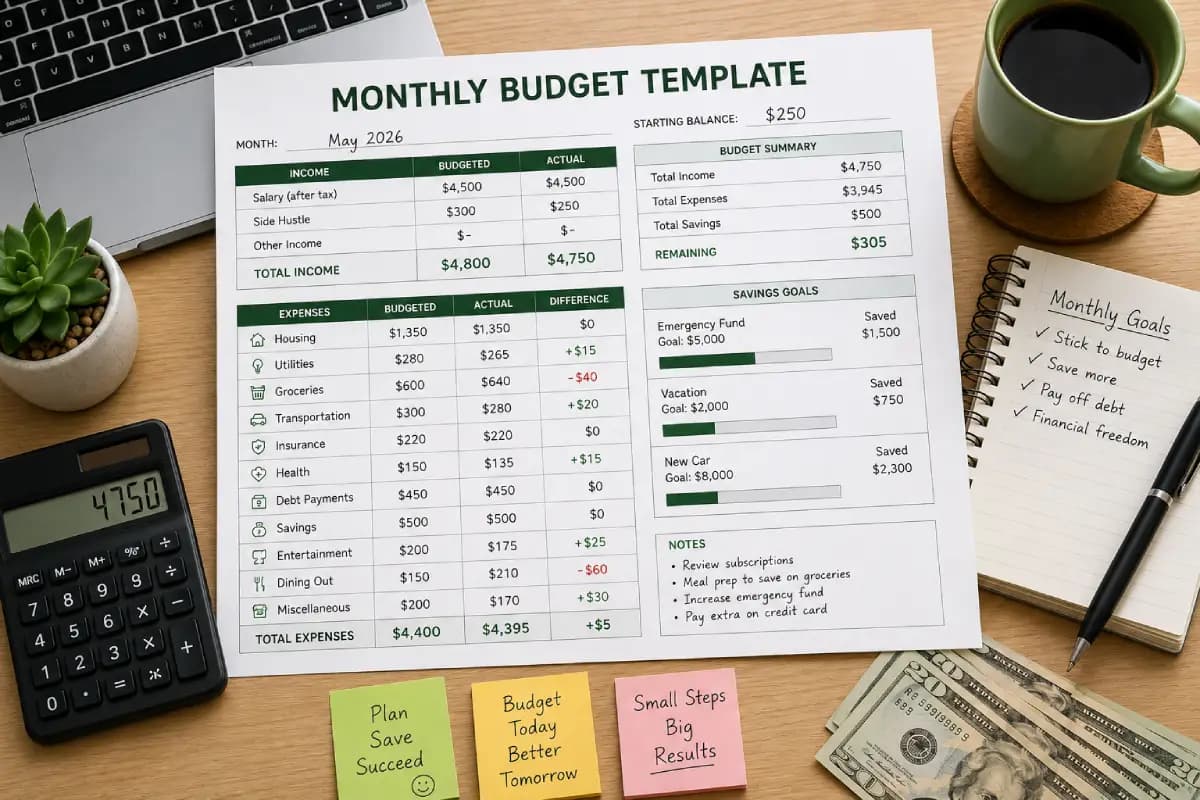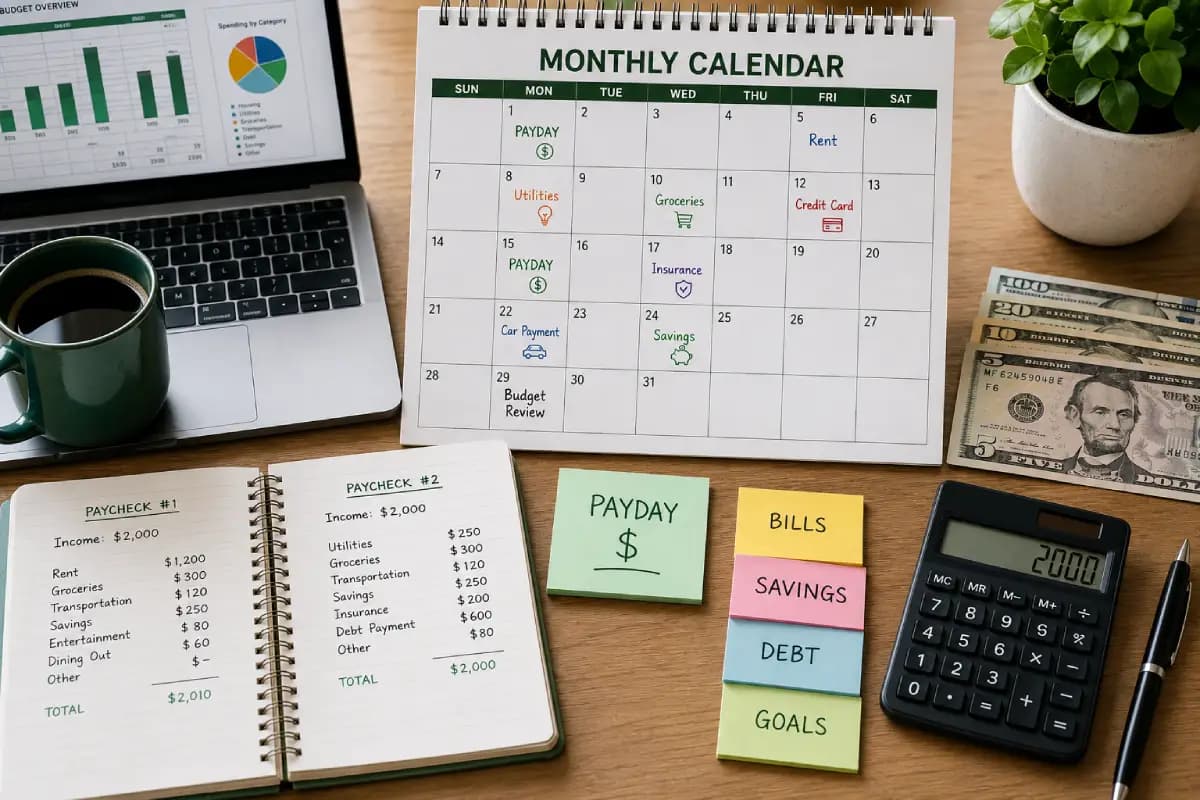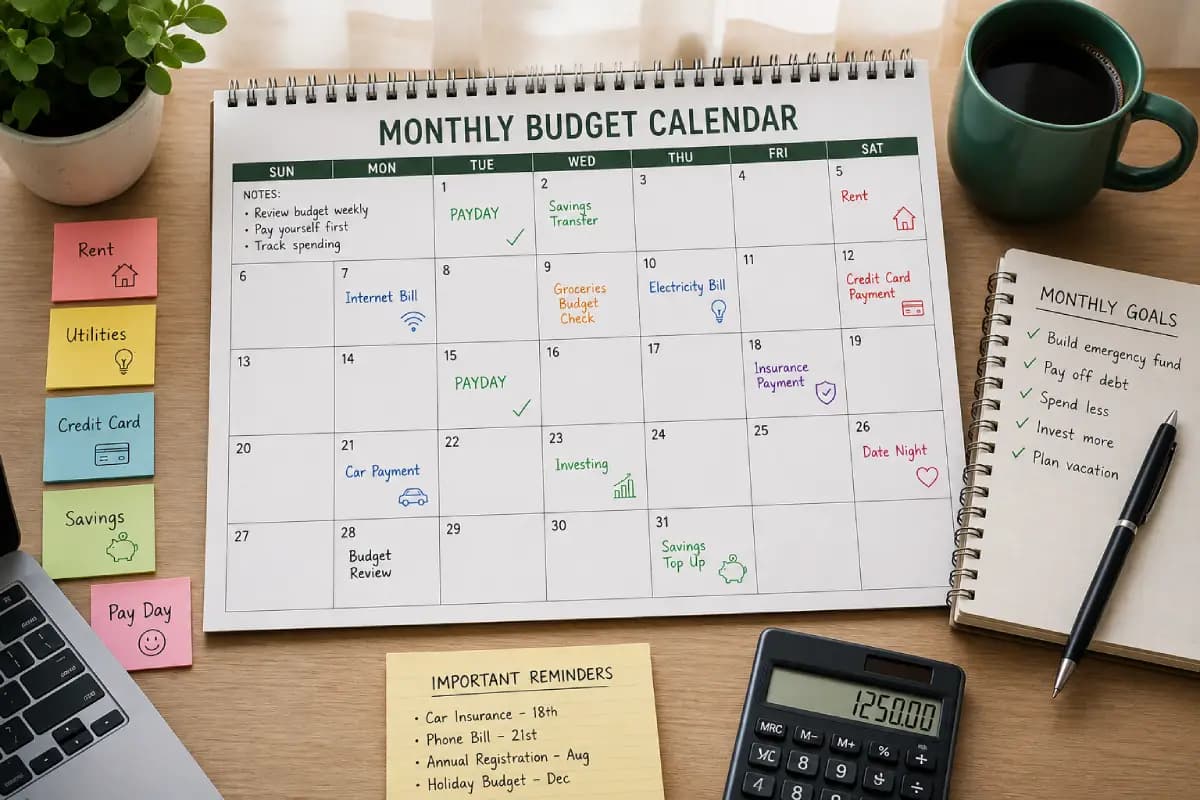
Most people don’t struggle with budgeting because they’re bad with money.
They struggle because they build budgets that don’t match real life.
A budget that only works on paper quickly falls apart after an unexpected car repair, a birthday party, or a higher-than-usual grocery bill. After missing the target once, many people simply give up and decide budgeting isn’t for them.
The truth is different.
A good monthly budget isn’t about restricting every dollar you spend. It’s about giving every dollar a purpose before you spend it.
Whether you’re trying to pay off debt, save for a vacation, build an emergency fund, or simply stop wondering where your paycheck disappeared every month, a practical budget can completely change your financial habits.
This guide will show you how to build a monthly budget that you can actually stick to.
Why most budgets fail
Many budgeting guides assume life is predictable.
Reality isn’t.
Your electricity bill changes.
Gas prices move.
Friends invite you to dinner.
Children need school supplies.
Your car eventually needs repairs.
Instead of preparing for these situations, many budgets ignore them completely.
The result?
People think they failed.
In reality, the budget failed them.
A successful budget leaves room for flexibility while still keeping your long-term goals on track.
What is a monthly budget?
A monthly budget is simply a spending plan.
It estimates how much money you’ll receive during the month and assigns every dollar to a specific purpose before the month begins.
Your budget should include both fixed expenses, such as rent or mortgage payments, and variable expenses like groceries, transportation, entertainment, and dining out.
It should also include savings.
Many people only save whatever is left over at the end of the month.
Successful savers usually do the opposite.
They treat savings like any other monthly bill.
Step 1: Calculate your monthly income
Start with the amount of money you actually receive—not your salary before taxes.
Include:
- Salary after taxes
- Freelance income
- Bonuses (if consistent)
- Rental income
- Child support or alimony
- Government benefits
- Side hustle income
If your income changes every month, calculate the average of the last six to twelve months.
This creates a more realistic number than using your highest paycheck.
Example
Sarah earns:
| Income Source | Monthly Amount |
| Salary | $4,200 |
| Freelance work | $450 |
| Rental income | $350 |
Total Monthly Income = $5,000
This becomes the starting point for the entire budget.
Step 2: Track every expense
Before changing your spending habits, you need to understand where your money currently goes.
Spend one full month tracking everything.
And yes—everything.
That includes:
- Morning coffee
- Streaming subscriptions
- Online shopping
- Parking fees
- Food delivery
- ATM fees
- Tips
- Small impulse purchases
Many people discover they’re spending hundreds of dollars every month on purchases they barely remember making.
A budgeting app can help automate this process, but a simple spreadsheet works just as well.
The important part isn’t the tool.
It’s consistency.
Fixed vs Variable expenses
Understanding the difference makes budgeting much easier.
| Fixed Expenses | Variable Expenses |
| Rent | Groceries |
| Mortgage | Restaurants |
| Car payment | Fuel |
| Insurance | Entertainment |
| Phone bill | Shopping |
| Internet | Travel |
Fixed expenses stay relatively stable.
Variable expenses are where most people have the greatest opportunity to save money.
Step 3: Separate needs from wants
This is often the hardest part of budgeting.
A need is something required to maintain your basic standard of living.
Examples include:
- Housing
- Utilities
- Basic groceries
- Transportation to work
- Insurance
- Healthcare
A want improves your lifestyle but isn’t essential.
Examples include:
- Streaming services
- Premium gym memberships
- Dining out
- Designer clothing
- New gadgets
- Daily coffee shop visits
The goal isn’t to eliminate wants.
It’s to make conscious decisions about them.
Ask yourself three questions
Before making a purchase, ask:
- Do I truly need this?
- Will I still value it next month?
- Is buying this delaying one of my financial goals?
These simple questions can prevent hundreds of dollars in unnecessary spending over the course of a year.
Step 4: Set realistic savings goals
One of the biggest budgeting mistakes is treating savings as an afterthought.
If you wait until the end of the month to save whatever is left, chances are there won’t be much left at all.
Instead, decide how much you want to save before you begin spending. Many people call this strategy “pay yourself first.” The idea is simple: move money into savings as soon as your paycheck arrives, then build the rest of your budget around what’s left.
Your savings goal should be realistic.
Trying to save 40% of your income overnight usually leads to frustration. Saving 5–10% consistently is often more effective than setting an ambitious goal you abandon after one month.
Start with one clear goal
Saving becomes much easier when you know exactly what you’re saving for.
Examples include:
- Building an emergency fund
- Paying off high-interest debt
- Buying a home
- Taking a vacation
- Replacing your car
- Investing for retirement
Instead of creating five different savings goals at once, focus on the one that will have the biggest impact on your finances.
Step 5: Build spending limits for every category
Once you know your income and your priorities, it’s time to decide how much each spending category should receive.
The purpose isn’t to predict every dollar perfectly.
It’s to create reasonable limits that help you make better decisions throughout the month.
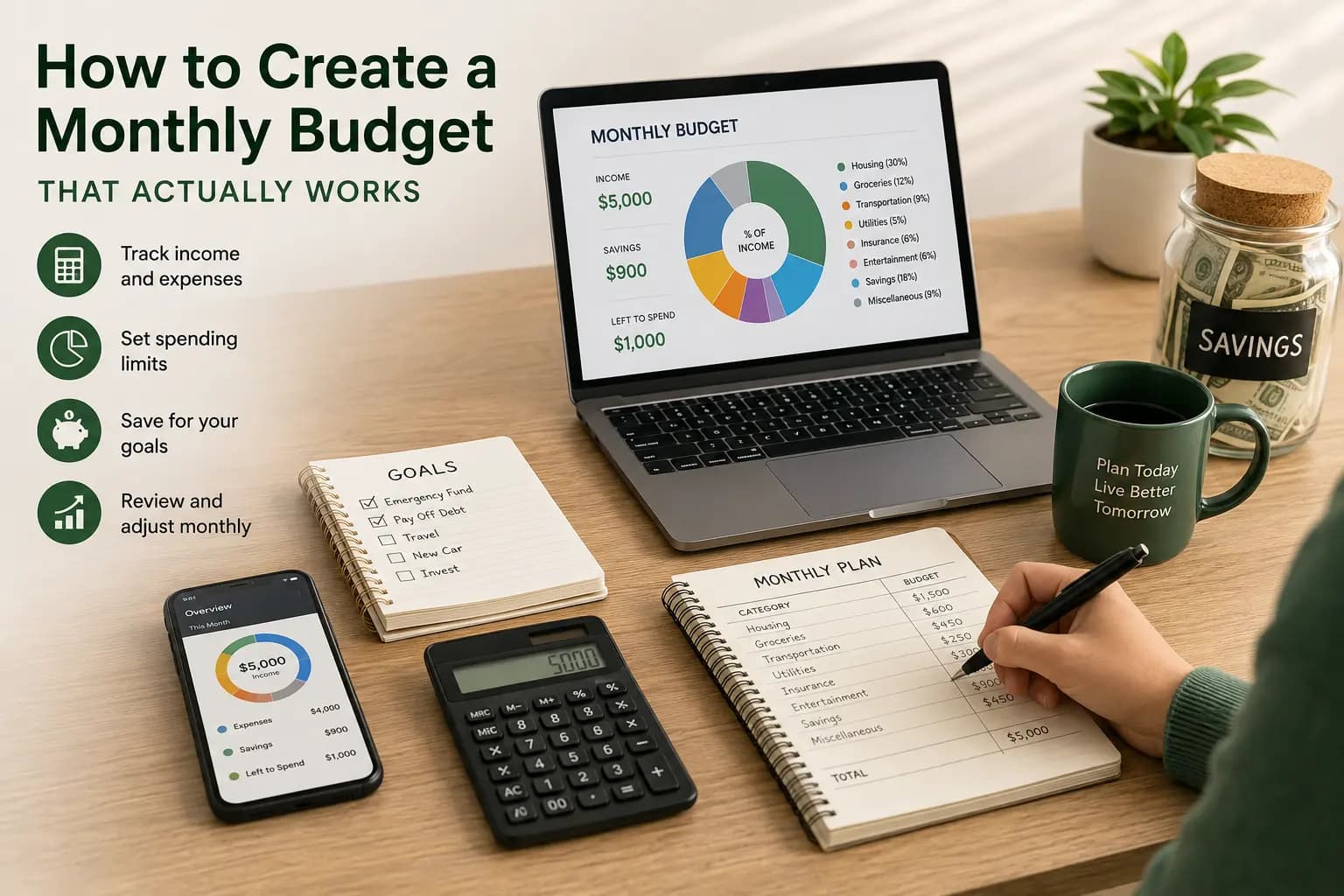
Here’s an example of a monthly budget for someone earning $5,000 after taxes.
| Category | Monthly budget | % of income |
|---|---|---|
| Housing | $1,500 | 30% |
| Utilities | $250 | 5% |
| Groceries | $600 | 12% |
| Transportation | $450 | 9% |
| Insurance | $300 | 6% |
| Entertainment | $300 | 6% |
| Dining out | $250 | 5% |
| Savings & investments | $900 | 18% |
| Miscellaneous | $450 | 9% |
Remember that no budget is universal.
Someone living in New York will spend far more on housing than someone living in a smaller city. Families with children will likely spend more on groceries, while someone working remotely may spend much less on transportation.
Your budget should reflect your life, not someone else’s.
Step 6: Review your budget every month
A budget isn’t something you create once and forget.
Life changes.
Your income changes.
Prices change.
Your financial goals change.
Review your budget at the end of every month and ask yourself:
- Which categories stayed within budget?
- Where did I overspend?
- Was that spending necessary?
- Can I reduce any expenses next month?
- Did I save as much as I planned?
Making small adjustments every month is far easier than trying to completely redesign your budget every year.
Build flexibility into your budget
Unexpected expenses aren’t a matter of if—they’re a matter of when.
Your budget should always include a small buffer for expenses you didn’t anticipate.
This could cover things like:
- A birthday gift
- A medical bill
- Car maintenance
- Home repairs
- School expenses
- Higher utility bills during extreme weather
Without this cushion, even a minor surprise can throw your entire budget off track.
Common budgeting mistakes
Even people who budget regularly make mistakes.
The good news is that most of them are easy to avoid once you recognize them.
Setting unrealistic goals
Cutting your grocery budget in half sounds great on paper.
In reality, you’ll probably exceed it within the first two weeks.
Aim for gradual improvements rather than dramatic changes.
Forgetting annual expenses
Some bills don’t arrive every month.
Examples include:
- Car registration
- Insurance renewals
- Holiday gifts
- Property taxes
- Annual subscriptions
Divide these costs by twelve and include a monthly amount in your budget.
Ignoring small purchases
A $6 coffee doesn’t seem expensive.
Neither does a $12 lunch.
But daily habits often become the largest source of unnecessary spending over an entire year.
Small purchases deserve just as much attention as large ones.
Giving up after one bad month
Almost nobody follows their budget perfectly.
Overspending once doesn’t mean you’ve failed.
Review what happened, make adjustments, and continue.
Consistency matters much more than perfection.
Signs your budget is working
A successful budget doesn’t necessarily mean you’re spending less.
It means you’re spending with intention.
You know where your money goes.
You’re making progress toward your financial goals.
And you’re no longer surprised by your bank balance at the end of the month.
Some positive signs include:
- You’re saving money consistently.
- Credit card balances are decreasing.
- Unexpected expenses cause less stress.
- You feel more confident making financial decisions.
- You’re no longer living paycheck to paycheck.
Frequently asked questions
How much of my income should I save each month?
A common recommendation is to save at least 20% of your income, but the right amount depends on your financial situation. If that’s not realistic today, start with 5% or 10% and gradually increase your savings as your income grows or your expenses decrease.
Should I budget if my income changes every month?
Yes. If your income varies, calculate your average monthly income based on the past six to twelve months. Build your budget around that average and prioritize essential expenses before discretionary spending.
What’s the easiest way to track my spending?
You can use a budgeting app, a spreadsheet, or even a notebook. The best system is the one you’ll actually use consistently. Recording your spending every few days is usually easier than trying to remember everything at the end of the month.
How often should I review my budget?
Review your budget at least once a month. However, checking your spending weekly can help you catch problems early and avoid overspending before the month ends.
What if I go over budget?
Going over budget occasionally is normal. Instead of giving up, identify what caused the extra spending and adjust your budget for the following month. Budgeting is an ongoing process, not a one-time event.
Should I pay off debt or save money first?
If you don’t have an emergency fund, try to save a small amount first—often enough to cover one month of essential expenses. After that, focus on paying off high-interest debt while continuing to build your savings over time.
Do I need separate savings accounts?
Not necessarily, but many people find it helpful to keep separate accounts for different goals, such as an emergency fund, vacations, or a down payment. This makes it easier to track progress and reduces the temptation to spend money set aside for future plans.
Can budgeting actually help me build wealth?
Absolutely. Budgeting doesn’t create wealth on its own, but it helps you control cash flow, reduce unnecessary spending, save consistently, and invest regularly. Those habits are the foundation of long-term financial success.
Bottom line
Creating a monthly budget isn’t about restricting your life—it’s about making intentional decisions with your money.
A good budget gives every dollar a purpose, helps you prepare for unexpected expenses, and keeps your financial goals within reach. It won’t be perfect every month, and that’s okay. The goal isn’t perfection – it’s progress.
The most successful budgets are simple enough to follow, flexible enough to adapt to life’s surprises, and realistic enough that you’ll stick with them over the long term.
If you’re just getting started, don’t wait for the perfect moment. Open your bank statements, calculate your income, list your expenses, and build your first budget today. You can always improve it next month.